Language
 English
English
English
SKYWATCHER
Temporarily Out Of Stock

Ships within 3-14 days.
In this case there is currently zero availability of these items which we usually keep in stock. However, it is very likely that these items are available in the distribution centers in Europe of the manufacturers with whom we cooperate or of our other suppliers and thus we can immediately replace a product that has run out. If we know in advance that the delivery time for temporarily out-of-stock products exceeds 14 days, then we will notify you by e-mail or telephone.


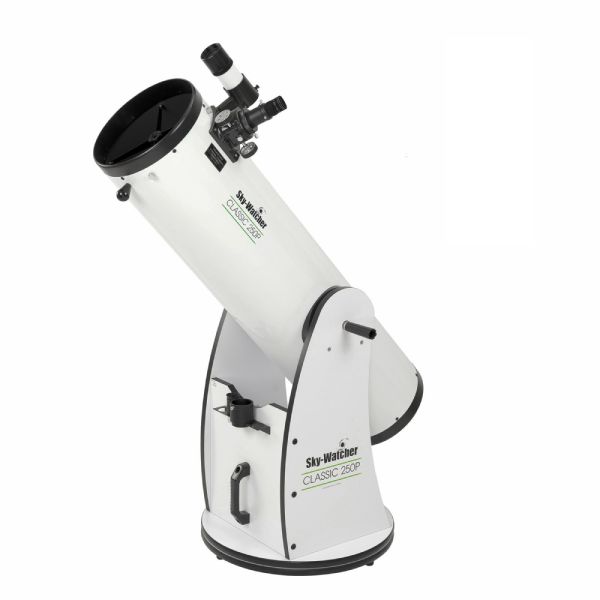
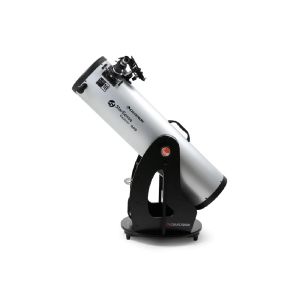
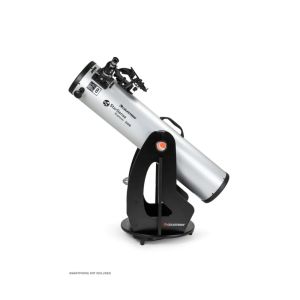
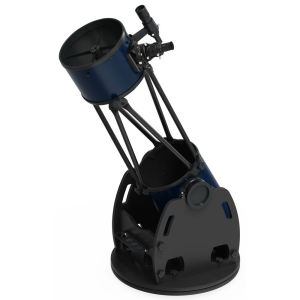
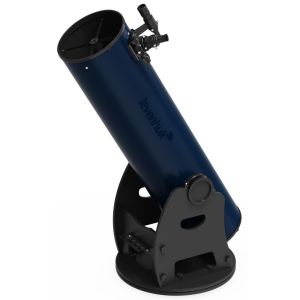
The Sky-Watcher Dobsonian Telescope 254mm/1200mm (10") has a "paraboloidal" primary mirror to eliminate spherical aberration and a four-arm, secondary- mirror bracket with fine supports (0.5mm thick), to reduce diffraction spikes and light loss. In addition, this model includes a 2" focuser with a 1.25" adapter, allowing the use of either eyepiece size. This model also includes the feature tension control handle.
PYREX GLASS ON THE 10"
The Sky-Watcher 10" Dobsonian features a primary mirror made of Pyrex glass. Because of its very low coefficient of thermal expansion, Pyrex glass is less affected by changing temperatures. This greatly reduces the cooling time of a telescope larger than 8" in diameter without using an extra fan. The great stability of this low expansion glass ensures high quality images. It is also substantially more resistant to scratches. Available for the 254mm/120mm (10") only.
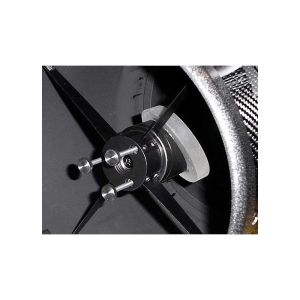
WHAT is Dobsonian Telescope and WHY the Tension Control Handle?
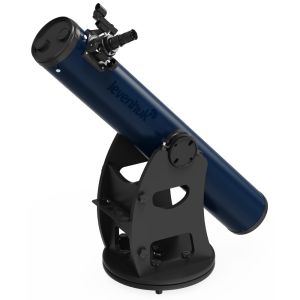
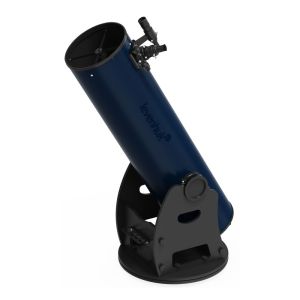
A simple, elegant form of altazimuth mount made to carry a Newtonian reflector was popularized by John Dobson in the late 1970's. The Dobsonian mounted telescope is popular among amateur astronomers and telescope makers because of its simplicity. In its simplest form, the Dobsonian mount consists of a box which allows the optical tube assembly to pivot in altitude, while the box itself is swivelled on a base in azimuth.
The Dobsonian mount usually relies on the friction between the side bearings on the optical tube of the telescope and a frictional material on the saddle to hold the optical tube in place. If there is too much friction, the telescope is difficult to move to center an object in the filed of view. If there is too little friction, the telescope will not stay where it is positioned. This makes stabilizing the optical tube of the telescope difficult when using a Dobsonian mount, especially when accessories, such as a finderscope or an eyepiece, are added to the optical tube. As long as the amount of friction is at an appropriate level, and therefore stabilization of the optical tube is achieved, the telescope can remain in its desired position to view an object and maintain the altitude even when the mount is rotated in azimuth.
The devices for stabilizing a telescope on the Dobsonian mount currently available include: a sliceable weight to counter balance the weight of the telescope, a friction lock that must be adjusted to inhibit movement of the telescope, and a spring attached between the telescope tube and mount to aid in stabilization. These devices are inconvenient to use because they do not provide a simple and user-friendly way to adjust the friction.
|
| Net Weight (g) | 27000 |
|---|---|
| Optical design | Newtonian Reflector |
| Aperture (mm) | 254 |
| Focal length - F (mm) | 1200 |
| Focal ratio (f/) | 4,7 |
| Mount | Altazimuth |
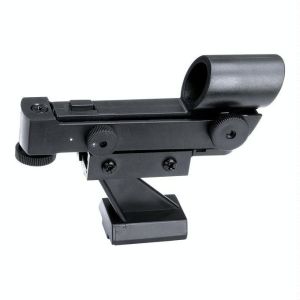
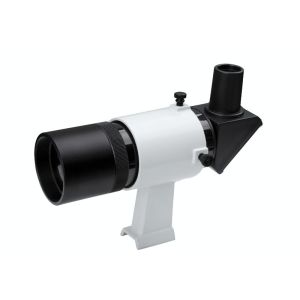
| Finderscope | 9x50 |
| Maximum useful magnification (x) | 500 |
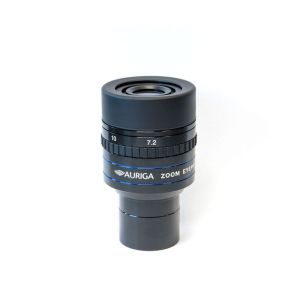
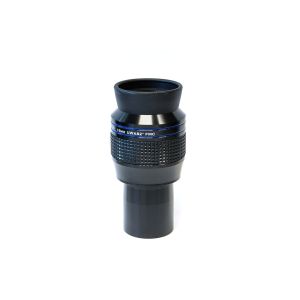
| Eyepiece | Super 20mm & Super 12.5mm, Ø31.8mm |
| Box 1 | 660 x 100 x 770 mm ( 16 Kg ) |
| Box 2 | 1250 x 460 x 500 mm ( 18 Kg ) |


All orders we receive until 15:00 concerning products in our warehouse, processed on the same day

Well-trained scientific and technical personnel are available to you at any time, to solve the questions and concerns about your equipment.

If you are not satisfied with the product you received, you can return it within 14 days of receipt.

Experience you can trust. Planetarium of Thessaloniki is the largest supplier of astronomy goods in the Balkans
 Ελληνικά