Language
 English
English
English
ASTRIAL
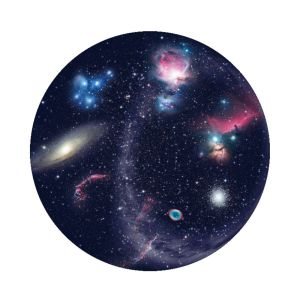
The discs for the Star Theatre home planetarium let you travel to many different parts of the universe from the comfort of your own home! - Designed and manufactured in Japan.
In Stock

Ships within 24-48 hours.
Orders received until 3 p.m. are usually shipped the same day.
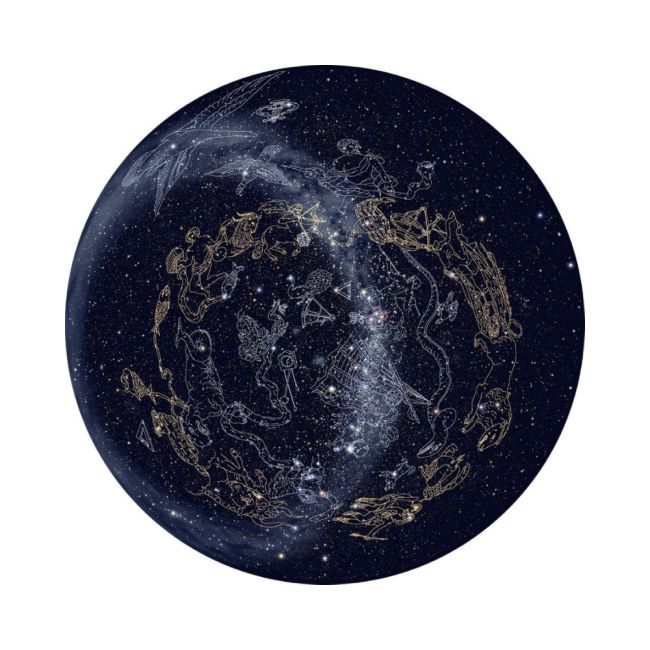
SEGA TOYS DISC FOR STAR THEATER - SOUTHERN CONSTELLATIONS
The discs for the Star Theatre home planetarium let you travel to many different parts of the universe from the comfort of your own home! - Designed and manufactured in Japan.
Constellations in the Southern Hemisphere
When travelling south from Japan, the Southern constellations start to rise on the horizon. While they are not visible from Japan, the more south you go, the more of them become apparent. Most of them have been established by Europeans during the Age of Discovery (15th to 17th centuries). Not few of those are creatures of the Southern Hemisphere as well as equipment of that time. They are thus constellations without any myths.
Argo Navis (Ship Argo)
The name is derived from the ship Argo in Greek mythology. Argo Navis was sailed by Jason and the Argonauts and has been a great adventure. Since the constellation was incredible big, it has since been divided into four parts: Vela, Pyxis, Puppis, and Carina.
Centaurus
This large constellation depicts a centaur, a creature that is half human, half horse, attacking Lupus in front of it with a spear. It is similar to the zodiac constellation Sagittarius, which is also named after a centaur. The front of Centaurus's foot consists of Alpha Centauri, the closest star system to the Sun, about four light-years away.
Crux
It is commonly known as the Southern Cross, but correctly called Crux. The constellation of four bright stars on the southern end of the Milky Way is among the most easily distinguished. While there is no bright star at the celestial South Pole, extending the long side of the cross by 4.5 times gives the position with a good accuracy.
Constellations of Creatures
Johann Bayer from Germany published Uranometria, in which he extended the classical Greek constellations by additional ones. These constellations depict creatures living in the Southern Hemisphere, such as Pavo, Phoenix and Chamaeleon. The appearance of those animals must have left a lasting impression on the European discoverers who saw them for the first time.
Constellations of Tools and Utensils
The constellations depicting tools and instruments such as Octans, Fornax, Horologium and Antlia were established by the French astronomer Nicolas-Louis de Lacaille. Most of them are difficult to spot as they are made up of faint stars.

All orders we receive until 15:00 concerning products in our warehouse, processed on the same day

Well-trained scientific and technical personnel are available to you at any time, to solve the questions and concerns about your equipment.

If you are not satisfied with the product you received, you can return it within 14 days of receipt.

Experience you can trust. Planetarium of Thessaloniki is the largest supplier of astronomy goods in the Balkans
 Ελληνικά